Welcome to Kind Minds Family Wellness

Culture, Research & Community Engagement

We are honored to be serving the Kitchener-Waterloo (KW) Region & surrounding area.

Our Mandate

Our Mission & Mandate

Kind Minds Family Wellness is a Black-led, Black-serving, and Black-focused non-profit organization dedicated to fostering mental health, emotional wellness, and community empowerment. We deliver equitable, culturally responsive programs and services grounded in evidence-based Afrocentric practices.

We strive to create safe, inclusive, and affirming environments that value and respect the voices, perspectives, and lived experiences of the individuals and families we serve across the Kitchener-Waterloo Region and Ontario.

Our Core Foundations

Comprehensive culturally-grounded support tailored to the unique needs of our community.

About Our Mission

To transform the personal narratives of Black individuals by supporting their navigation of systems and fostering holistic wellness and self-actualization.

Explore

Our Values

Respect. Equity. Inclusivity. Openness. Diversity. Dignity and the Self-determination of our service users and their social and cultural networks.

Explore

Commitments & Mandate

Advancing research, policy advocacy, education, and collective action to dismantle anti-Black racism and structural barriers.

Explore
Our Rationale

Why do we have to work differently at KMFW?

Below, we share a growing diversity of Black-identified persons in our region based on the recent census by Statistics Canada (2022). Analyzing our region's municipal, provincial, and federal data, we compared numbers between 2016 and 2021, and the increase of more than 5% of new residents to the region being Black-identifying means that the support and services we provide have become more critical as the demand for customized and culturally inclusive support for Black persons grows locally.

"Recognizing their experiences of systemic/structural barriers and disenfranchisement in existing (Eurocentric) services, we address the health and social needs of Black-identifying persons who must use a culturally grounded approach. Our approach promises better outcomes as it also targets and addresses the layers of culture and identity within service provision. Also, the data and growth can only validate the need for all Black-serving organizations to intentionally ensure equitable practices, procedures, and protocols inform their services and support to Black-identifying recipients.."

Ajirioghene Evi

Founding Director

Source: Statistics Canada, 2022

Waterloo Region by the Numbers

Black-identifying population growth (2016–2021)

~15,000

Black Population in 2016

~26,500

Black Population in 2021
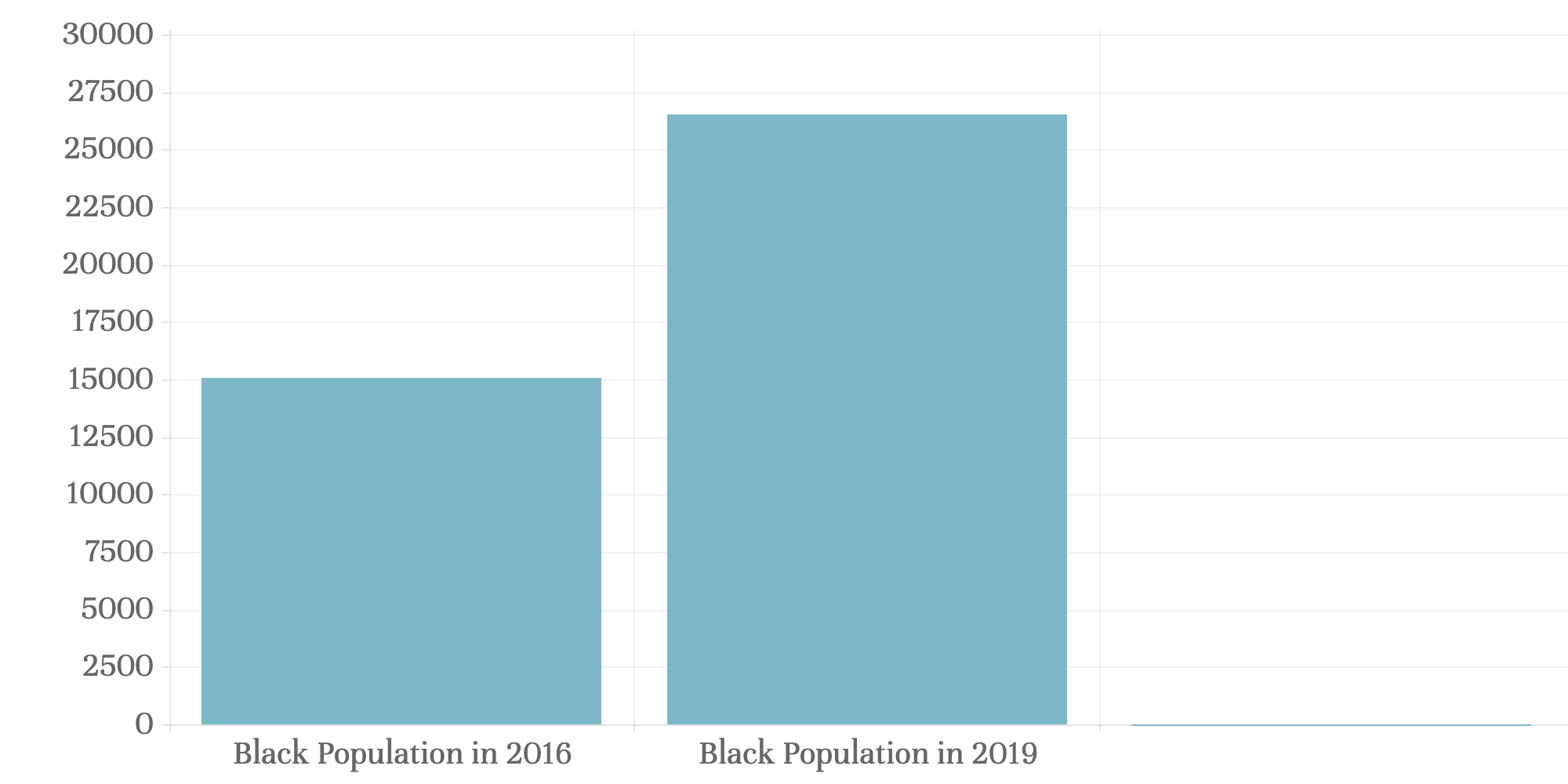
Bar chart showing Black population growth in Waterloo Region

75%+ increase in Black-identifying new residents to the region within the last 5 years.

WATERLOO REGION BY THE NUMBERS

One of our Research Coordinators has captured the growing diversity of Black-identified persons in our region. They analyzed the Waterloo Region's municipal, provincial, and federal data and compared numbers between 2016 and 2021.

2,500+

Individuals & Families Supported

Accessing culturally grounded Afrocentric counselling, youth leadership, and family care.

500+

Clinical & Community Sessions

Safe, barrier-free mental health hours delivered by registered Black clinicians.

150+

Psychoeducation Workshops

Interactive community circles covering anti-Black racism, systemic navigation, and intergenerational wellness.

35+

Collaborative Partnerships

Working alongside school boards, healthcare alliances, municipalities, and grassroots agencies.

REGIONAL DEMOGRAPHIC DISTRIBUTION

Comparative visible minority census data across Southwestern Ontario municipalities.

Statistics Canada

16.7%

In Waterloo Region, Blacks (16.7%) were the 2nd most commonly reported visible minority group between 2016 and 2019. This is an increase from 15.1% in 2016. The number of people identifying as Black increased by about 11,455 (Region of Waterloo, 2019, Census Canada, 2023).

Statistics Canada

2.9%

In 2016, 15,110 persons (2.9% of the population) identified as Black in the Waterloo Region (Statistics Canada, 2017).

Statistics Canada

6.8%

Blacks are the 2nd most significant minority group in Kitchener, Ontario, according to the 2017 Census. This is a percentage increase from 4.1% in 2016. The total visible minority population in Kitchener is 80,485, and the Black population is 17,510 (21.8%). (Statistics Canada, 2017)

Statistics Canada

5.0%

In Hamilton, Ontario, Black persons are the second largest visible minority group. According to the Census, 28,415 (20.2%) were Black-identifying persons, thus making them the 2nd most visible population in 2021. This is an increase from 20,245 persons in Hamilton who identify as Black in 2017. (Social Planning and Research Council of Hamilton, 2017; Statistics Canada, 2017)

Statistics Canada

22.4%

There are 585 (22.4%) Black persons in Stratford, Ontario. Blacks are the 2nd most prominent minority group in Stratford. This is an increase from 335 (18.4%) in 2016. (Statistics Canada, 2017)

Statistics Canada

14.9%

In Cambridge, Ontario, the second largest group is the Black, making up 4,880 (14.9%), an increase from 3,255 people in 2016 (Statistics Canada, 2021)

Statistics Canada

16.5%

In Guelph, Ontario, Black persons are 5,940 (16.5%) – 2nd most in 2021. This moves them up to 2nd most minority group from the 3rd most prominent minority group in Guelph as of 2017 (Statistics Canada, 2017).

Statistics Canada

4.1%

There are 17,450 Black persons in London, Ontario, the 3rd most prominent minority group. This is an increase of about 5,505 persons identifying as Black. (Statistics Canada, 2021).

Community in Action

Slideshow Image
Slideshow Image
Slideshow Image
Slideshow Image
Slideshow Image
Slideshow Image
Slideshow Image
Slideshow Image
Slideshow Image